Tuesday, March 30, 2010

Good idea / bad idea

If you ever watched the '90s cartoon show Animaniacs, you probably saw a segment in the program called "Good Idea/Bad Idea." If you've never seen Animaniacs, here's a two-minute compilation of some of the Good Idea/Bad Idea sketches (courtesy of Youtube). Hilarious!

Now then: in the publishing world, there are very often scenarios in which what would otherwise be a great idea is actually a terrible idea due to one or two crucial detail(s). As part of your (and, frankly, my) continued education in this industry, I present to you the following examples:

Good Idea: Venting to your friend, spouse, significant other, &c about a negative review of your book.
Bad Idea: Venting to Twitter, Facebook, the Internet at large, &c about a negative review of your book.

Good Idea: Following an agent's guidelines when submitting your novel.
Bad Idea: Following an agent to his or her office/car/home to submit your novel.

Good Idea: Reading industry blogs to improve your writing and querying.
Bad Idea: Reading industry blogs instead of writing or querying.

Good Idea: Selling yourself in order to promote your novel.
Bad Idea: Literally selling yourself in order to promote your novel.

Good Idea: Setting aside a specified block of time to write each day.
Bad Idea: Setting aside your family, friends, and day job to write each day. (May lead to the above scenario.)

Feel free to create your own good idea/bad idea in the comments!

--

Pimp My Blog, 4 February 2010

Monday, March 29, 2010

Poets & Writers Magazine: Top Ten Topics for Writers

Since our founding in 1970, Poets & Writers has served as an information clearinghouse of all matters related to writing. While the range of inquiries has been broad, common themes have emerged over time. Our Top Ten Topics for Writers addresses the most popular and pressing issues.
    • Introduction
    • The World of Literary Magazines—Determining Which Are Right for Your Work
    • Submission Guidelines
    • Simultaneous Submissions
    • Cover Letters
    • Other Resources
    • Introduction
    • Small Presses vs. Large Publishers
    • Chapbooks
    • Submission Guidelines
    • What to Expect from Your Publisher
    • What to Expect from a Standard Book Contract
    • Marketing and Distribution
    • Self-Publishing and Print-on-Demand Companies
    • What is a Vanity or Subsidy Press?
    • Other Resources
    • Introduction
    • What a Literary Agent Can Do for You
    • Finding the Right Literary Agent
    • The Query Letter
    • What You Should Know Before Signing a Contract
    • Literary Agents and Poets
    • Fee-Charging Agents
    • Other Resources
    • Introduction
    • Other Resources
    • Introduction
    • Recognizing Scams
    • Other Resources
    • Introduction
    • Glossary of Rights
    • Other Resources
    • Introduction
    • Developing a Mailing List
    • Creating a Web Site
    • How to Set Up a Reading Tour
    • Hiring an Independent Publicist
    • Other Resources
    • Introduction
    • The Benefits of Attending a Writers Conference or Colony
    • Writing Groups/Workshops
    • Online Writing Workshops
    • Other Resources
    • Introduction
    • What an MFA Degree Can Offer
    • How to Choose an MFA Program
    • Low-Residency MFA Programs
    • Other Resources
    • Introduction
    • Other Resources

Saturday, March 27, 2010

A writing career becomes harder to scale

Authors used to expect to struggle as they gained experience. But now it is sell - or else.

In the late 1980s, when I was a graduate student working on short stories and flirting with the idea of a novel, I came across an essay that was being passed around my circle of friends. It was titled "Writing in the Cold: The First Ten Years," and the author was the legendary editor and founder of New American Review, Ted Solotaroff.

Ten years! In the cold! Solotaroff wondered where all the talented young writers he had known or published when he was first editing New American Review had gone. Only a few had flourished. Some, he speculated, had ended up teaching, publishing occasionally in small journals. But most had just . . . given up. "It doesn't appear to be a matter of talent itself," he wrote. "Some of the most natural writers, the ones who seemed to shake their prose or poetry out of their sleeves, are among the disappeared. As far as I can tell, the decisive factor is what I call endurability: that is, the ability to deal effectively with uncertainty, rejection, and disappointment, from within as well as from without."

writer's apprenticeship -- or perhaps, the writer's lot -- is this miserable trifecta: uncertainty, rejection, disappointment. In the 20 years that I've been publishing books, I have fared better than most. I sold my first novel while still in graduate school and published six more books, pretty much one every three years, like clockwork. I have made my living as a writer, living off my advances while supplementing my income by teaching and writing for newspapers and magazines.

As smooth as this trajectory might seem, however, my internal life as a writer has been a constant battle with the small, whispering voice (well, sometimes it shouts) that tells me I can't do it. This time, the voice taunts me, you will fall flat on your face. Every single piece of writing I have ever completed -- whether a novel, a memoir, an essay, short story or review -- has begun as a wrestling match between hopelessness and something else, some other quality that all writers, if they are to keep going, must possess.

Call it stubbornness, stamina, a take-no-prisoners determination, but a writer at work reminds me of nothing so much as a terrier with a bone: gnawing, biting, chewing, until finally there is nothing left to do but fall away.

I have taught in MFA programs for many years now, and I begin my first class of each semester by looking around the workshop table at my students' eager faces and then telling them they are pursuing a degree that will entitle them to nothing. I don't do this to be sadistic or because I want to be an unpopular professor; I tell them this because it's the truth. They are embarking on a life in which apprenticeship doesn't mean a cushy summer internship in an air-conditioned office but rather a solitary, poverty-inducing, soul-scorching voyage whose destination is unknown and unknowable.

If they were enrolled in medical school, in all likelihood they would wind up doctors. If in law school, better than even odds, they'd become lawyers. But writing school guarantees them little other than debt.

Rereading Solotaroff's essay, as I did recently, I found that he was writing of a time that now seems quaint, almost innocent. By the 1980s, he bemoaned, the expectations young writers had of their future lives had "been formed by the mass marketing and subsidization of culture and by the creative writing industry. Their career models are not, say, Henry Miller or William Faulkner, but John Irving or Ann Beattie."

With the exception of Irving, most of the writers referenced by Solotaroff (Beattie, Bobbie Ann Mason, Joan Chase, Douglas Unger, Lynne Sharon Schwartz, Alan Hewat) would draw blank looks from my students, and the creative writing industry of the mid-1980s now seems like a few mom-and-pop shops scattered on a highway lined with strip malls and mega-stores. Today's young writers don't peruse the dusty shelves of previous generations. Instead, they are besotted with the latest success stories: The 18-year-old who receives a million dollars for his first novel; the blogger who stumbles into a book deal; the graduate student who sets out to write a bestselling thriller -- and did.

The 5,000 students graduating each year from creative writing programs (not to mention the thousands more who attend literary festivals and conferences) do not include insecurity, rejection and disappointment in their plans. I see it in their faces: the almost evangelical belief in the possibility of the instant score. And why not? They are, after all, the product of a moment that doesn't reward persistence, that doesn't see the value in delaying recognition, that doesn't trust in the process but only the outcome. As an acquaintance recently said to me: "So many crappy novels get published. Why not mine?"

The emphasis is on publishing, not on creating. On being a writer, not on writing itself. The publishing industry -- always the nerdy distant cousin of the rest of media -- has the same blockbuster-or-bust mentality of television networks and movie studios. There now exist only two possibilities: immediate and large-scale success, or none at all. There is no time to write in the cold, much less for 10 years.

I recently had the honor of acting as guest editor for the anthology "Best New American Voices 2010," the latest volume in a long-running annual series that contains some of the finest writing culled from students in graduate programs and conferences. Joshua Ferris, Nam Le, Julie Orringer and Maile Meloy are just a few of the writers published in previous editions, but now the series is coming to an end. Presumably, it wasn't selling, and its publisher could no longer justify bringing it out. Important and serious and just plain good books, the kind that require years spent in the trough of false starts and discarded pages -- these books need to be written far away from this culture of mega-hits, and yet that culture is so pervasive that one wonders how a young writer is meant to be strong enough to face it down.

The new bottom line

At the risk of sounding like I'm writing from my rocking chair, things were different when I started. My first three books sold, in combination, fewer than 15,000 copies in hardcover. My editor at the time told me there were 4,000 serious readers in America, and if I reached them, I was doing a good job. As naïve as this may sound, it never occurred to me that my modest sales record might one day spell the end of my career. I felt cared for, respected. I continued to be published, and eventually, my sales improved. I wrote a bestselling memoir, appeared on "The Oprah Winfrey Show" and published a subsequent novel that found a pretty wide readership. My timing has been good thus far -- and lucky.

But in the last several years, I've watched friends and colleagues suddenly find themselves without publishers after having brought out many books. Writers now use words like "track" and "mid-list" and "brand" and "platform." They tweet and blog and make Facebook friends in the time they used to spend writing. Authors who stumble can find themselves quickly in dire straits. How, under these conditions, can a writer take the risks required to create something original and resonant and true?

Perhaps there is a clue to be found near the end of Solotaroff's essay: "Writing itself, if not misunderstood and abused, becomes a way of empowering the writing self. It converts anger and disappointment into deliberate and durable aggression, the writer's main source of energy. It converts sorrow and self-pity into empathy, the writer's main means of relating to otherness. Similarly, his wounded innocence turns into irony, his silliness into wit, his guilt into judgment, his oddness into originality, his perverseness into his stinger."

The writer who has experienced this even for a moment becomes hooked on it and is willing to withstand the rest. Insecurity, rejection and disappointment are a price to pay, but those of us who have served our time in the frozen tundra will tell you that we'd do it all over again if we had to. And we do. Each time we sit down to create something, we are risking our whole selves. But when the result is the transformation of anger, disappointment, sorrow, self-pity, guilt, perverseness and wounded innocence into something deep and concrete and abiding -- that is a personal and artistic triumph well worth the long and solitary trip.

--

Shapiro's new book, "Devotion: A Memoir," is just out. She will read at Vroman's Bookstore in Pasadena on Feb. 24 and Diesel Books in Brentwood on Feb. 26.

--

LA Times, February 07, 2010, By Dani Shapiro

"Sex" definition prompts dictionary ban in US schools

A parent's complaint over a 'sexually graphic' definition has seen dictionaries removed from southern Californian schools.

Dictionaries have been removed from classrooms in southern California schools after a parent complained about a child reading the definition for "oral sex".

Merriam Webster's 10th edition, which has been used for the past few years in fourth and fifth grade classrooms (for children aged nine to 10) in Menifee Union school district, has been pulled from shelves over fears that the "sexually graphic" entry is "just not age appropriate", according to the area's local paper.

The dictionary's online definition of the term is "oral stimulation of the genitals". "It's hard to sit and read the dictionary, but we'll be looking to find other things of a graphic nature," district spokeswoman Betti Cadmus told the paper.

While some parents have praised the move – "[it's] a prestigious dictionary that's used in the Riverside County spelling bee, but I also imagine there are words in there of concern," said Randy Freeman – others have raised concerns. "It is not such a bad thing for a kid to have the wherewithal to go and look up a word he may have even heard on the playground," father Jason Rogers told local press. "You have to draw the line somewhere. What are they going to do next, pull encyclopaedias because they list parts of the human anatomy like the penis and vagina?"

A panel is now reviewing whether the Menifee ban will be made permanent. The Merriam Webster dictionary joins an illustrious set of books that have been banned or challenged in the US, including Nobel prize winner Toni Morrison's Song of Solomon, which last year was suspended from and then reinstated to the curriculum at a Michigan school after complaints from parents about its coverage of graphic sex and violence, and titles by Khaled Hosseini and Philip Pullman, included in the American Library Association's list of books that inspired most complaints last year.

--

Alison Flood, The Guardian, Monday 25 January

Thursday, March 18, 2010

Authors cry foul over Google 'rights grab

Philip Pullman

Proposed settlement could prove to be one of the most important agreements in digital publishing.

Philip Pullman: 'If I want to sell my rights to ­anybody, why the hell should I have to go and ask Google first?' Photograph: Rex Features

British authors are divided over plans by Google to create the world's largest online library and profit from out-of-print titles.

Philip Pullman is among those opting out of the proposed Google book settlement, which critics condemn as a "massive rights grab" and an unacceptable reshaping of the copyright landscape to the detriment of writers.

Helen Oyeyemi is also among those opposed to the settlement, currently being thrashed out in the US courts, which could prove to be one of the most important agreements in digital publishing.

Google Books would carry "substantial extracts" of books that are out of print but still within copyright, with US buyers then paying to download the title in full. Revenue generated would be split, with 63% going to the rights holder and the rest to Google. Although only US consumers will be able to use this service, the titles include works published in Britain, Canada and Australia as well as the US.

But, in a move that has angered critics, writers had to choose to opt out by 28 January. For those who did not, their work would be automatically included.

Pullman, author of the His Dark Materials trilogy, said: "Many of us have books that are out of print but still receive a little bit of money from them through the PLR [public lending right]. And, jJust because a book is out of print doesn't mean it belongs to Google. It belongs to me. And if I want to sell my rights to anybody, why the hell should I have to go and ask Google first?"

Nick Harkaway, son of John le Carré and author of The Gone-Away World, said opting out was "the only way of saying I do not believe this is appropriate. What is happening here is a massive rights grab. It's reshaping the copyright landscape. I don't think it beneficial to have a private company, de facto, owning the history of the written word.

"People are quite cosy with Google. But, it is not guaranteed this library will remain with Google forever. Imagine your least favourite media conglomerate buying the sole rights to digitally exhibit the history of the printed word, over 10m titles. You start to sound like a nut. But the scale of this is enormous".

American authors, publishing organisations and Google are currently trying to agree the settlement, which has yet to be ratified by a New York court.

Google insists the proposed settlement "is not about acquiring rights to books". "It is about creating a new revenue channel for rights holders, and opening up access to these books," said a spokeswoman.

However, some writers are bemused by its complexity. Kate Mosse, best known for her 2005 novel Labyrinth, said she "never really understood" exactly what it meant, and was relieved when her publisher, Hachette UK – originally an objector to the settlement – made the decision for her by advising its authors to remain in.

Its chief executive, Tim Hely-Hutchinson, said the company did not think Google should have interfered with other people's copyright, and the proposed settlement was a "weak compromise". But, like other many other publishers such as the Random House Group and Penguin, that argument had to be weighed against the interests of its authors being better served by retaining the ability to control how titles were used by Google.

John Lanchester, whose has just published his fourth novel, Whoops!, said "every writer I know has opted out. It's is a complete violation of the principle of copyright."

The Society of Authors, which has 9,000 members in Britain, agreed that the settlement "runs against the basic principle of copyright in which you get permission every time you use something". But, said its general secretary, Mark Le Fanu, very few members had raised objections, while "the great majority seemed to think it could have potentially significant benefits".

But there remain a few who are completely unmoved by the clamour. "I leave it all to my agent," said Martin Amis. "I just can't get interested."

--

Caroline Davies, The Guardian, Monday 1 February 2010

My novel about painting, criminality, and the greatest art forger of the twentieth century!

My novel about painting, criminality, and the greatest art forger of the twentieth century!
Please click the cover!

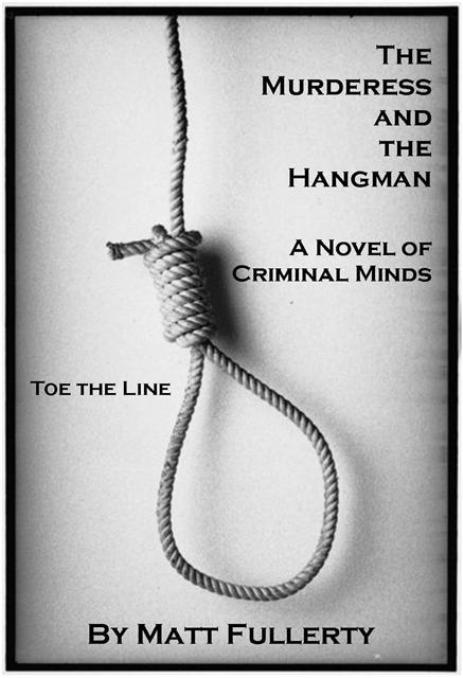
My novel about London, murder, mayhem, and a female killer!

My novel about London, murder, mayhem, and a female killer!
Please click the cover!

My novel about running, Princeton University, and a conman who lost it all!

My novel about running, Princeton University, and a conman who lost it all!
Please click the cover!

My novel about love, betrayal and chess in New Orleans

My novel about love, betrayal and chess in New Orleans
Please click the book!

My semi-autobiographical novel about a very British education and becoming an American!

My semi-autobiographical novel about a very British education and becoming an American!
Please click the cover!

My novel about London, murder, mayhem, and a female killer!

My novel about London, murder, mayhem, and a female killer!
Please click the cover!